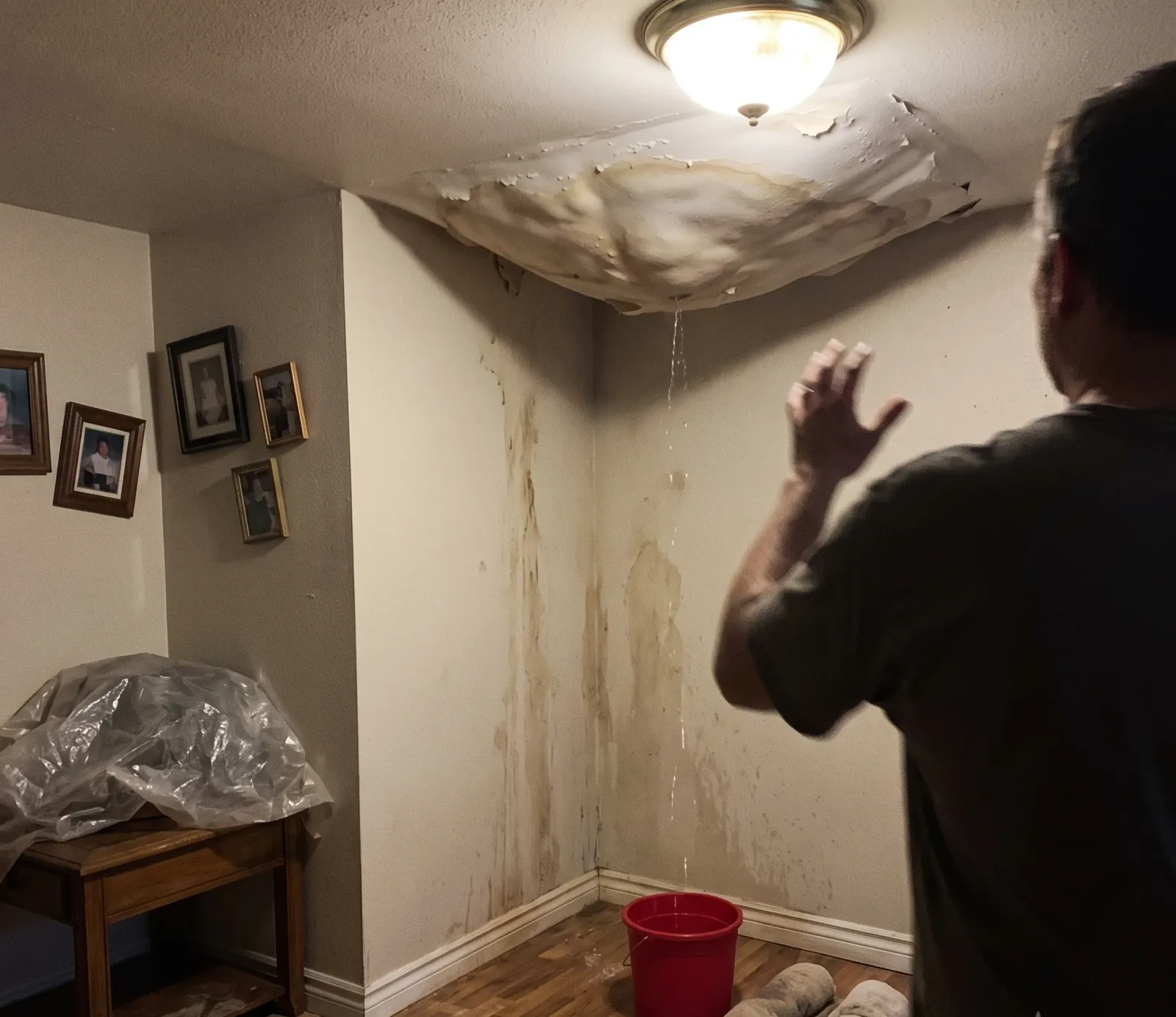
A brownish ring on a ceiling in Hyde Park or Crestview doesn't tell you much by itself. Austin summers push air conditioners hard for months, and a drip pan or condensate line that's slightly off can leave a mark that looks alarming but costs little to fix. The trick is reading where the water shows up and how it behaves, not just that it appeared.
Location Points To A Cause
Start with what sits above the stain. A mark directly under an attic unit in a Windsor Park or Allandale home usually traces back to that equipment. A stain near an exterior wall or roofline in Travis Heights points somewhere else entirely, often toward flashing or a supply line rather than anything mechanical overhead.
Timing Tells Its Own Story
Condensation follows the thermostat, not the calendar. It shows up on the hottest, most humid Austin afternoons and eases off once the air dries out or the unit cycles less. A recurring drip tied to heat and humidity level reads differently than an intermittent leak that shows up regardless of weather or season.
Read The Stain Pattern
Check the timing first. Condensation from an attic air handler tends to show up on hot, humid Central Texas afternoons, and it often eases up once the unit cycles off. A plumbing or roof problem doesn't follow that pattern. If the puddle or ceiling stain shows up during a dry cold front, or after a Hill Country storm rolls through, something other than humidity is behind it.
Check The Pan And The Line
Where the water shows up matters as much as when. Moisture centered under a ductline or near the vent stack, with a stain that stays a consistent size, usually traces back to the HVAC system. A stain that spreads outward, follows a ceiling joist toward an exterior wall, or shows up two rooms away from any duct run points toward a supply line, a roof leak, or slab-related moisture instead.
When Roofing Is The Culprit
Water near a chimney, vent stack, or roof flashing after one of Austin's Hill Country storms usually means the roof, not the air conditioner. Flashing seals joints around these penetrations, and a small gap can let rain in during a downpour while staying dry the rest of the week, which throws off a quick diagnosis.
When Plumbing Is The Culprit
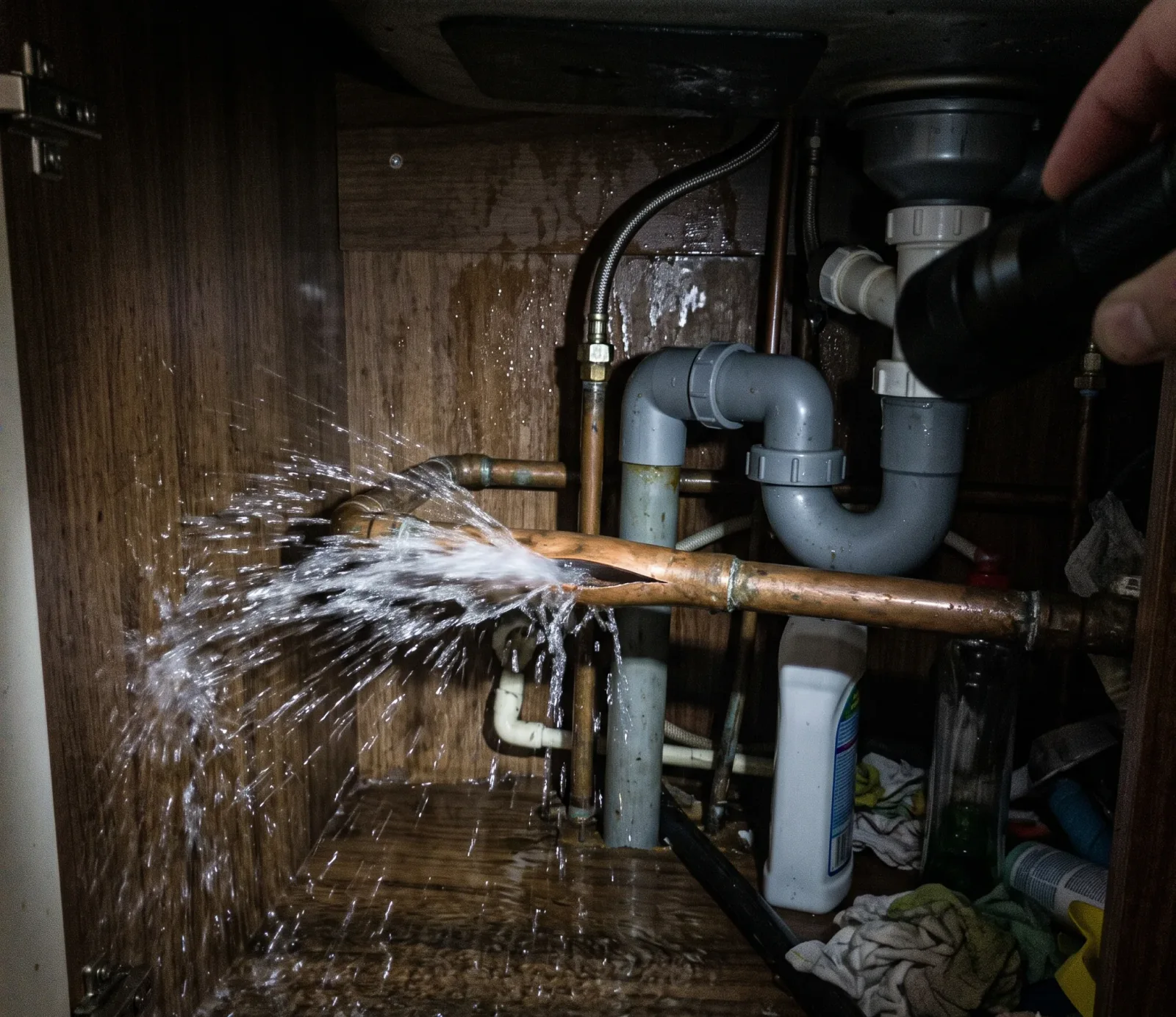
A puddle that reappears in the same spot regardless of whether it rained or the air conditioner ran points toward a slow leak in a supply line, inside a wall or under a slab foundation. Homes in older sections of Rosedale or Clarksville built before modern plumbing standards see this pattern more than newer construction elsewhere.
Humidity Muddies The Picture
Central Texas humidity makes this call harder than it sounds. A house can carry damp air and a musty feel through July and August without any leak at all, just from moisture working its way in around doors, windows, and unsealed gaps, which can mimic the signs homeowners associate with an actual water problem.
Track It For A Week
Mark the edge of the stain with a pencil and check it after a stretch of dry, cooler weather. If the mark hasn't grown and the drip pan is dry, condensation was likely the cause and it may have already resolved. If the stain keeps spreading during dry days, something else is feeding it.
Ignoring It Has A Cost
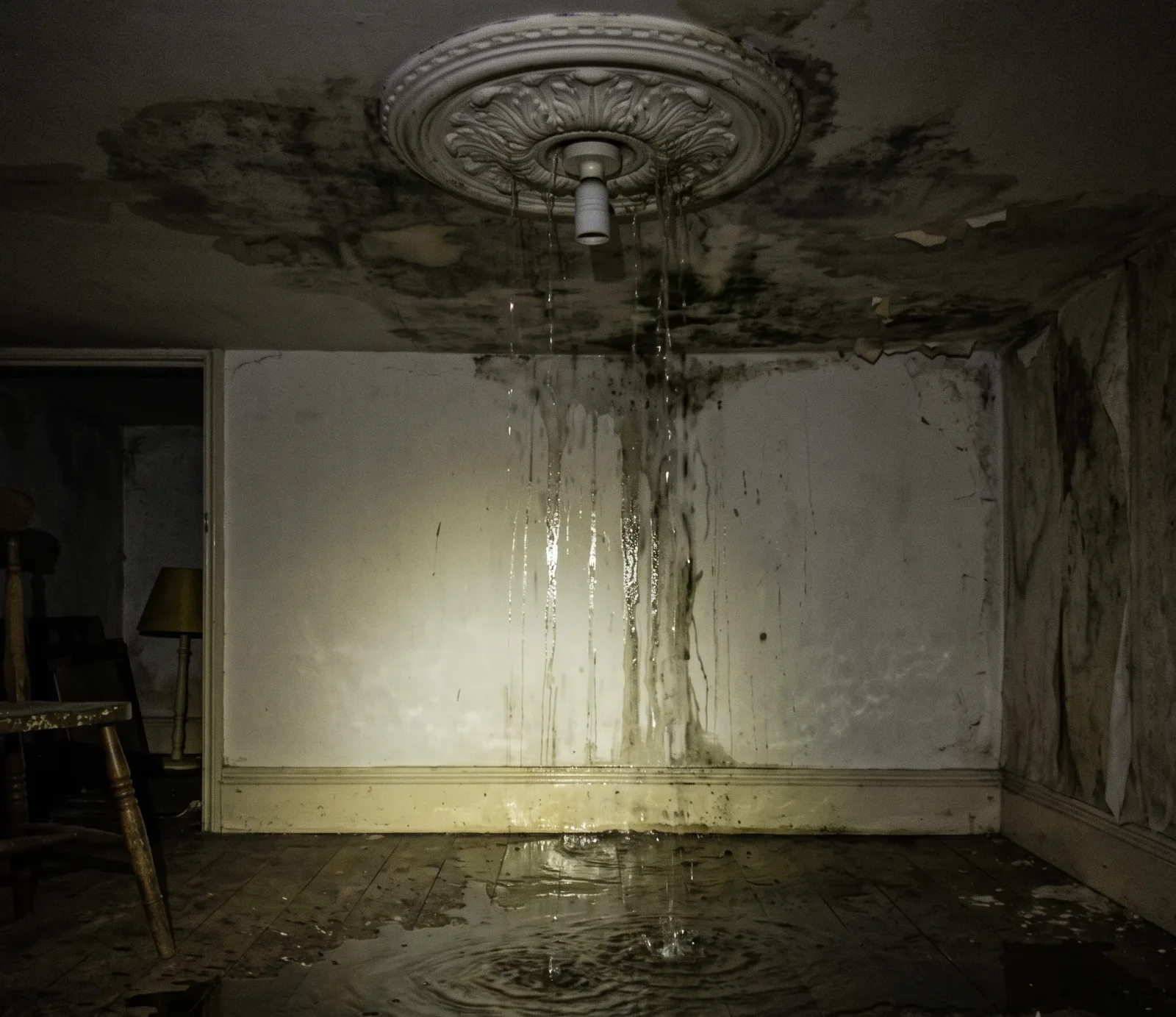
Left alone, even a condensation drip can soften drywall or warp a ceiling over a full Austin summer, no plumbing failure required. A slow leak from a supply line does the same damage faster and often unseen behind a wall, since slab foundation homes hide a leaking pipe until the stain finally reaches the surface.
When To Call Someone
A slow leak can hide behind a wall for months before it ever reaches drywall, so a small stain doesn't always mean a small problem. If the mark returns after you've dried and repainted it, or shows up regardless of humidity level or season, treat it as a constant drip rather than a one-time event. At that point, tracing it usually needs someone who can open a wall or get on the roof, not just watch the ceiling.
Ruling Out Vents And Flashing
Most ceiling stains across Austin homes, from Mueller to South Lamar, turn out to have one clear cause once someone traces the water's path from source to stain. A careful look at the drip pan, the roofline, and the plumbing run usually settles which one it was without much guesswork left over.
Dealing with this in your home?
Austin's clay soil expands after rain and pulls back tight in a hard freeze, so a post-tension slab near Zilker can crack years after the pour. Add Hill Country storms that dump inches in an hour, and Shoal Creek pushes water toward homes that never flooded before.