No water pressure at any faucet
No water pressure at several fixtures right after a cold night means the break likely sits upstream in a main supply line. Shut the main off and get a plumber out before thawing sends water through the wall.
December through February brings nearly all of Austin's frozen pipe calls, spiking hardest right after a hard freeze like Winter Storm Uri in February 2021, when thousands of homes lost running water citywide.
When water freezes inside a supply line it expands and splits the pipe open. The crack often stays silent while the ice holds it shut, then lets go once the line thaws. In Austin the runs that fail are the ones nobody insulated against a hard freeze: attics, exterior walls, and older crawl spaces.
Water under an Austin slab doesn't move the same everywhere. A crack near Zilker sits on different rock than one in Mueller, and that changes how far moisture travels before anyone notices a soft spot in the floor.
No water pressure at several fixtures right after a cold night means the break likely sits upstream in a main supply line. Shut the main off and get a plumber out before thawing sends water through the wall.
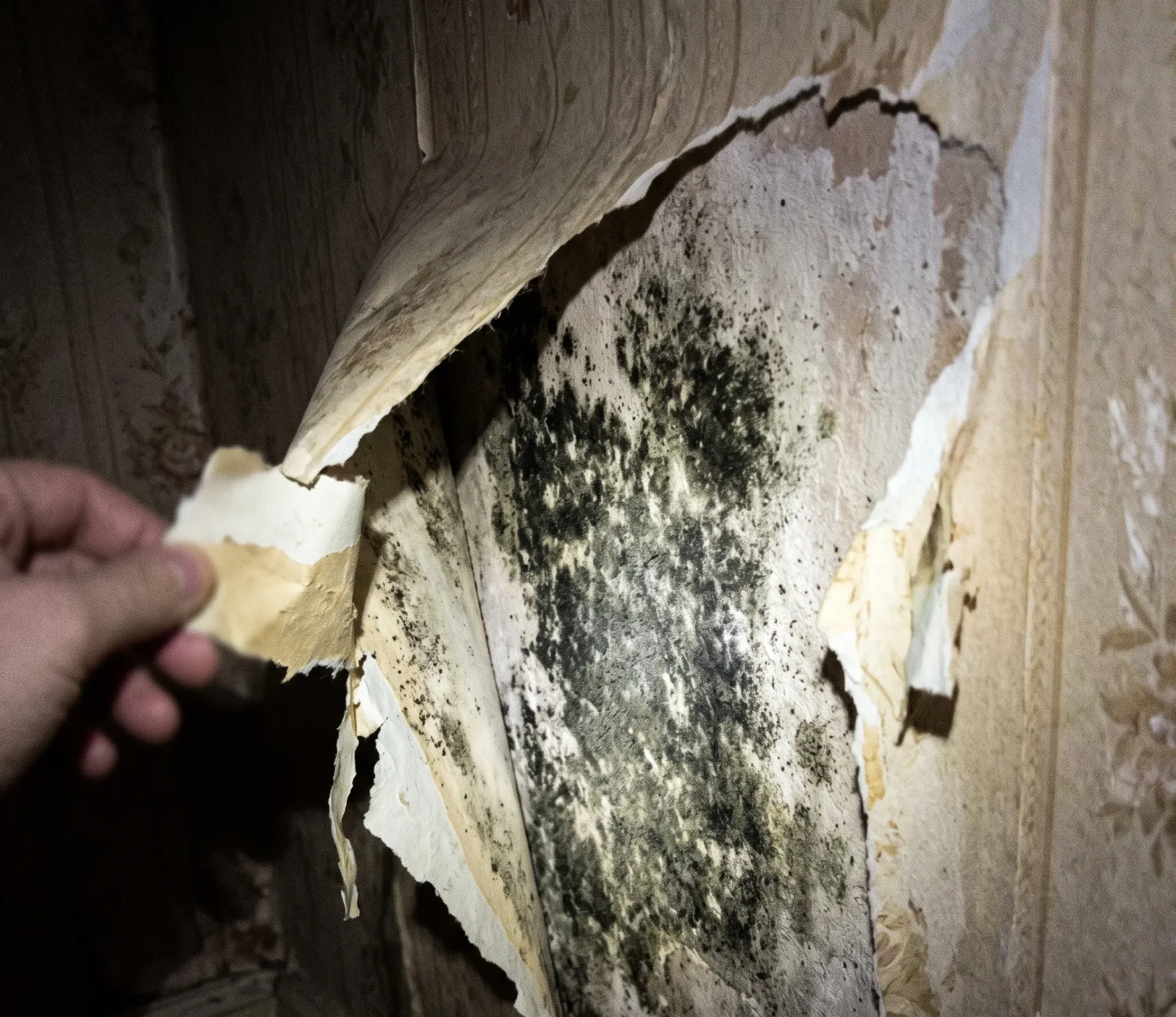
A damp ceiling or wall with no visible plumbing nearby, showing up during or just after a freeze, usually means a supply line split behind it. It is not a roof leak or condensate clog; open the cavity before mold sets in.
A sudden jump on the water meter, or the dial still turning with every fixture off, points to water running somewhere unseen. Paired with a recent cold snap, a frozen and split line is the likely cause.
A ceiling that sags or feels soft after a freeze means water has pooled above it long enough to soften the drywall. It can drop without warning, so keep people clear and call before it gives way.
A faint cold stripe or slight bulge on drywall near an exterior corner often marks a pinhole burst inside that wall. Press lightly; if it gives or feels spongy, water has already saturated the material behind it.
Austin's winters stay mild most weeks, so plenty of pier-and-beam homes near Hyde Park and Crestview were built without the freeze protection a colder climate would require on exposed supply lines.
When a hard freeze does hit, like Winter Storm Uri in February 2021, it stresses attic runs and exterior walls across the city at once, so one cold snap tends to produce many claims in the same week.
A hard freeze like Winter Storm Uri catches pipes across Austin off guard, and older plumbing in Clarksville or Rosedale often has the least protection against it. A burst line during a freeze can run for hours before anyone's home to notice.
A slab leak happens underneath the concrete foundation, often from clay soil movement shifting a buried supply line, and shows up as a warm floor spot rather than a wall or ceiling stain. A slab leak works upward through concrete and shows as a warm patch underfoot with no spray and no sound. A frozen pipe burst lets go above the floor, inside a wall or an attic, so the water arrives from above or behind and the timing lines up with a freeze rather than with clay soil moving.
The licensed pros we connect you with locate the split section first, close the nearest isolation valve rather than the whole house where the plumbing allows, and check whether the break sits inside a wall, attic run, or crawl space.
Once the licensed pros find the break, they extract standing water, pull only the wet drywall or flooring a moisture meter confirms, and set drying equipment before closing anything back up or painting over it.
Austin sits on a fault line between two soil types, not a coastline, so flooding here means Onion Creek or Shoal Creek rising fast, or a post-tension slab cracking under clay soil movement near I-35. The licensed pros we connect you with read that difference before they open a wall.
| What's Covered | Cost Factors |
|---|---|
| A slab crack in Tarrytown or Hyde Park does not announce itself. Clay soil under the foundation shifts with rain, and water finds the gap weeks before a stain shows on the carpet or baseboard inside. | Onion Creek and Shoal Creek rise fast after Hill Country storms, and homes near Mueller or East Cesar Chavez can see water at the door within an hour. Slab foundations mean that water spreads across floors immediately, with no basement to slow it down first. |
| Austin's flood risk isn't a coastline problem, it's a grading problem. Water crossing Shoal Creek or Waller Creek during Hill Country storms backs into low-lying yards near Travis Heights and Mueller before it ever reaches a wall. Add a post-tension slab losing its seal, and moisture gets inside without a single pipe failing. | A downpour that swells Boggy Creek or the Colorado River can trap runoff against a slab edge faster than gutters carry it away. Homes closer to Montopolis or Windsor Park feel this first, since grading there sends water toward the foundation instead of past it. |
| Clay soil under Travis Heights shifts through wet and dry spells, opening gaps beneath post-tension slabs that plumbing leaks slip through unnoticed. Winter adds a second threat: pipes near Waller Creek can split open once temperatures drop hard and fast. | Waller Creek and Shoal Creek both cross Austin's central grid, and a fast summer storm can push either one over its banks near Hyde Park or Allandale within an hour. Slab foundations sit low to that grade, so runoff finds a door before anyone gets home. |
Shut off the main, open a faucet to bleed pressure, and move belongings off the wet floor. Do not point a hair dryer or heat gun at a frozen section, and skip the flame entirely. A cracked supply line, a failed shower pan, or a slab leak all need a licensed plumber before any drying starts, not after.
Standing water from a frozen pipe burst soaks drywall, insulation, and subfloor fast, and mold can take hold within a day or two once Austin's humidity climbs back up. This differs from a slow condensate clog or a sewage backup, which carries contamination risk on top of moisture. Either way, wet wall cavities need to dry, not just look dry, before anyone reoccupies that room.
Soaked flooring near the Colorado River or Onion Creek only spreads overnight. Reach out and a licensed pro answers before it worsens.Water that sits for days near Zilker or Hyde Park can turn a drying job into a mold job. Once growth starts, TDLR-licensed mold remediation is priced apart from extraction and drying. Ask for both numbers in writing before the licensed pros in Austin start work. pricing guide, and the service that handles this is Burst Pipe & Supply Line Water Damage.
AC Overflow Damage. The tube draining moisture off your AC's indoor coil has backed up, so the pan beneath it overflows onto the closet floor or drips through the ceiling below.
Sprinkler System Water Loss. Fire sprinkler discharge is recognized by sudden, heavy water from a ceiling-mounted head, often triggered by heat, a hard freeze, or accidental impact, not by a leak or drip pattern.
Water Damage Restoration, Austin. A dishwasher leak is water escaping the machine itself, not the plumbing behind the wall, so it stays close to one appliance instead of spreading across a slab.
Usually yes, since a hard-freeze break counts as sudden and accidental rather than gradual wear like a slow cast iron pipe leak or a neglected condensate clog. A standard Austin homeowners policy typically covers the discharge itself, though the frozen pipe's own repair cost may not be included.
It splits where ice expanded inside the line, most often in an attic run, an exterior wall, or a pier-and-beam crawl space in an older Austin home without insulation protecting that section of supply line from a hard freeze.
Turn the main valve off before you dial anyone. A split supply line under pressure keeps flowing the whole time it stays open, and each extra minute adds more water into drywall, subfloor, and insulation across the house.
Not always right away. The pipe can crack during the freeze itself with no visible leak until the ice inside melts. That's usually when water finally pushes through the crack and starts showing up on floors or ceilings.
West of the Balcones Escarpment, limestone sits close to the surface around Bull Creek and Barton Creek Greenbelt, so runoff moves fast instead of soaking in. A hard rain there fills low-lying yards before it ever reaches Lady Bird Lake downstream.
Call (512) 764-6583