Hotels & Hospitality
Hotels & Hospitality Water Response
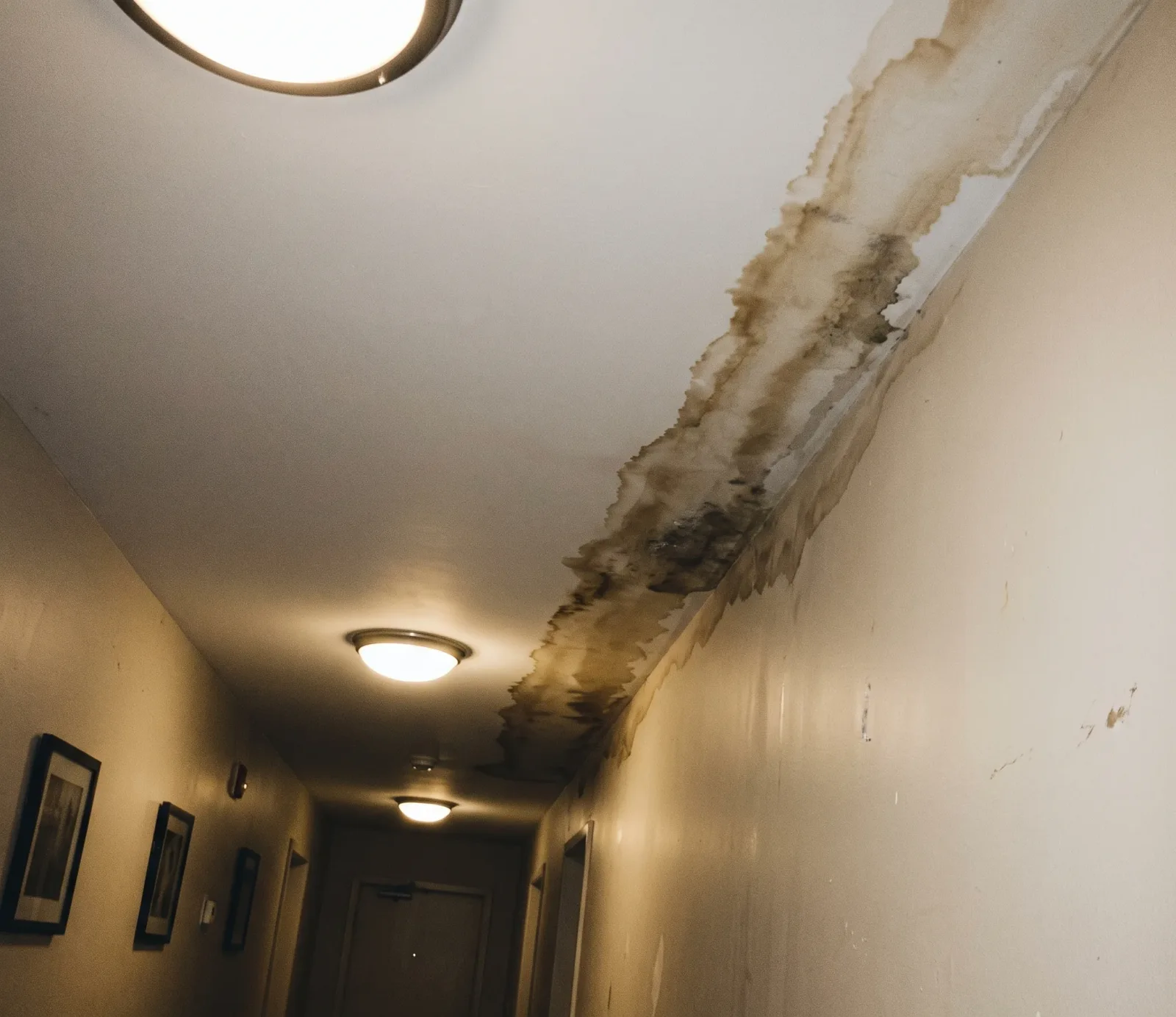
One leak intrusion, several units, and a property manager who needs it isolated fast.
Multifamily water damage happens when a burst pipe, riser, or roof leak in one apartment threatens units below or beside it through shared walls and floors. Austin's older stock in Crestview and Highland mixes with newer builds in Mueller, and both push water sideways through a building fast. Isolating the source matters before every unit on that line gets checked.
Austin's apartment stock runs from older Highland-area low-rises to newer construction near the Arboretum, and both share one problem: a burst line inside a wall doesn't stop at the unit it started in. Water drops through framing, tracks along a shared wall, and turns up in the unit below before anyone upstairs knows there's a problem.
West Campus towers near UT Austin and older garden-style complexes off Guadalupe Street handle a leak differently. A high-rise built since the 2000s routes plumbing through concrete chases; an older low-rise near North Loop often has wall cavities that hold water longer once it gets in.
The math changes once more than one household is affected. A single-family owner in Tarrytown can wait a day to call someone. A property manager in Mueller with six units touched by the same leak cannot, because each occupied unit is a lease, a resident, and a separate habitability clock running at once.
A pipe that fails in a Crestview or Windsor Park complex rarely stays inside four walls. It travels along framing members and settles into whatever unit sits downhill from the source, often the one directly below or beside it, long before staining shows on that neighbor's ceiling.
Vacancy compounds this in Austin's turnover cycle. A unit sitting empty between leases near North Loop or Mueller, air conditioning off, is where a slow leak intrusion goes unnoticed longest, because no one is inside to hear water running or see a ceiling darken.
| Building Area | Who's Affected | Response Priority |
|---|---|---|
| Garden-style, walk-up buildings | Leak spreads across one breezeway level | Check units left and right of source |
| Mid-rise with interior corridors | Water travels down through the corridor floor | Map moisture on units below, not just beside |
| Buildings with a shared riser | One riser break floods every stacked unit | Shut off riser with building management fast |
| Occupied units near the leak | Tenant relocation and lease terms slow access | Schedule drying around tenant availability |
| Vacant or make-ready units | Nobody notices damage until turnover walkthrough | Check vacant units on a set schedule |
| Common area flooding | Lobby and corridor damage hits every resident | Dry around building traffic, not around it |
| Adjacent unit, shared wall | Moisture crosses the wall before drywall shows it | Test the neighboring unit at the same visit |
| Older buildings, aging plumbing | Slow leaks run inside walls unreported for weeks | Read wall cavities, not just visible stains |
Building management juggling a leak in Rosedale or Allandale is managing more than one repair. There's the source unit, the adjacent unit that took on moisture through the shared wall, and a corridor or stairwell that residents still cross every day while it dries out.
Vacancy timing changes the math here in a way it never does for one owner-occupied home. A leak that hits during make-ready, while a unit sits empty between leases, can go unnoticed for days since nobody is running the air conditioning or checking the floors.
Austin's rental supply leans heavily on multi-unit buildings in denser pockets like West Campus and Downtown Austin, so a meaningful share of water calls in those areas already run through a property manager rather than a single resident deciding alone what happens next.
A soaked corridor runner or a wet lobby floor near a complex on South Lamar is a fall risk for every resident who walks past it, not just the household whose unit flooded. Building management carries that exposure the whole time the common area stays wet.
A hard freeze like Winter Storm Uri in February 2021 turns this into a building-wide event instead of a single-unit one. A frozen supply line bursting in a shared mechanical room can send water down a riser into units on several floors at once.
Evaluating a multifamily loss near Crestview or Wells Branch means following where the water actually went, not just the unit where someone reported it. That includes checking the floor below, the unit sharing the wall, and any riser chase the water could have used to travel.
Texas requires a state-issued mold license through TDLR for remediation work above the statutory threshold under Occupations Code Chapter 1958. In a multifamily building near Rosedale or Cherrywood, that licensing question can apply to more than one unit from a single source.
Property managers calling in from complexes near Milwood or Anderson Mill usually want to know how many units are actually affected, not just what one repair costs. A single supply line failure can touch a source unit, an adjacent unit, and a shared corridor all at once.
Getting the water stopped and drying equipment running matters more than sorting out which unit pays for what. That sequencing question can wait; a wet corridor near Hyde Park or Cherrywood spreading into a second or third unit cannot.
Make-ready windows are where a lot of Austin multifamily damage hides. A unit near Mueller or Scofield Farms sits vacant for cleaning and repainting, and a slow leak behind a washer connection goes unnoticed until the next tenant moves in and finds a soft floor.
Post-tension slabs common in newer Mueller and Circle C Ranch construction move differently than the pier-and-beam homes still standing near Clarksville and Hyde Park. A crawl space traps moisture after a leak; a slab hides it, so the same burst pipe shows up as two different problems.Downtown Austin, East Austin and MLK / Rosewood. Central Texas humidity does not let wet materials air out on their own, and a ceiling stain in Cherrywood or a soaked carpet in Mueller can sit damp for days once summer settles in. Left alone that dampness turns into a mold problem, not just a repair job.
Austin's slab foundations crack under clay soil that swells after storms near Shoal Creek or Waller Creek, letting water track inward long after skies clear. Pier-and-beam homes near Barton Creek trap moisture underfloor for weeks. Whoever you call, confirm IICRC certification and ask how they document moisture readings for your insurer before work starts.A commercial space along Guadalupe Street or near the UT Austin campus often costs more to dry than a house. Open layouts and hard flooring mean more equipment and longer run times. Get a written scope before the licensed pros in Austin begin. pricing guide, and the commercial overview covers how a scheduled program works.
Hotels & Hospitality Water Response
Clinics And Medical Offices
Condo & HOA Properties
In Austin apartment buildings, a burst supply line often travels down through a riser chase and soaks the unit below before anyone upstairs notices. Property managers should check the unit directly beneath and on either side within the hour, not just the unit where the leak started.
Often, yes. Austin apartment buildings route plumbing through shared chases and walls, so a leak upstairs can travel down through the framing before it ever reaches your ceiling. Buildings near Mueller and Arboretum built on shared risers see this most. Getting the source checked fast limits how many units end up affected.
Usually. If the leak stays contained to your unit and drying equipment doesn't need to run in the corridor, most tenants stay put. A stack or riser failure affecting multiple floors changes that math, since building management may need broader access to trace it.
It depends on the lease and who caused the leak. Texas Property Code lets a landlord a reasonable window to repair once notice is given, longer if an insurance payout is the holdup. A tenant in an unlivable unit near Mueller or Windsor Park may have grounds to end the lease early instead of waiting.
Call now if a unit at your Austin property is leaking. The licensed pros we connect you with can check the riser line and adjacent units before the water travels further.
Call (512) 764-6583